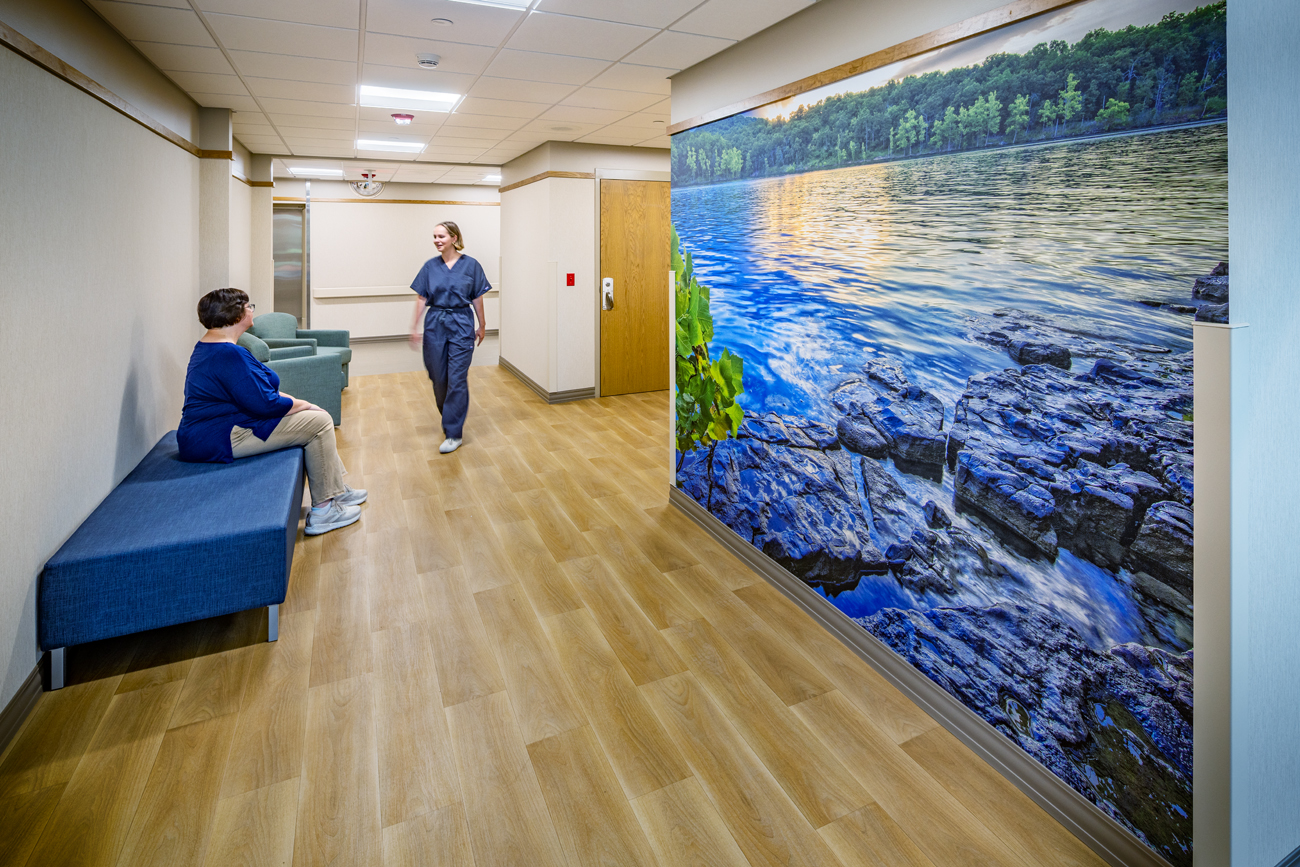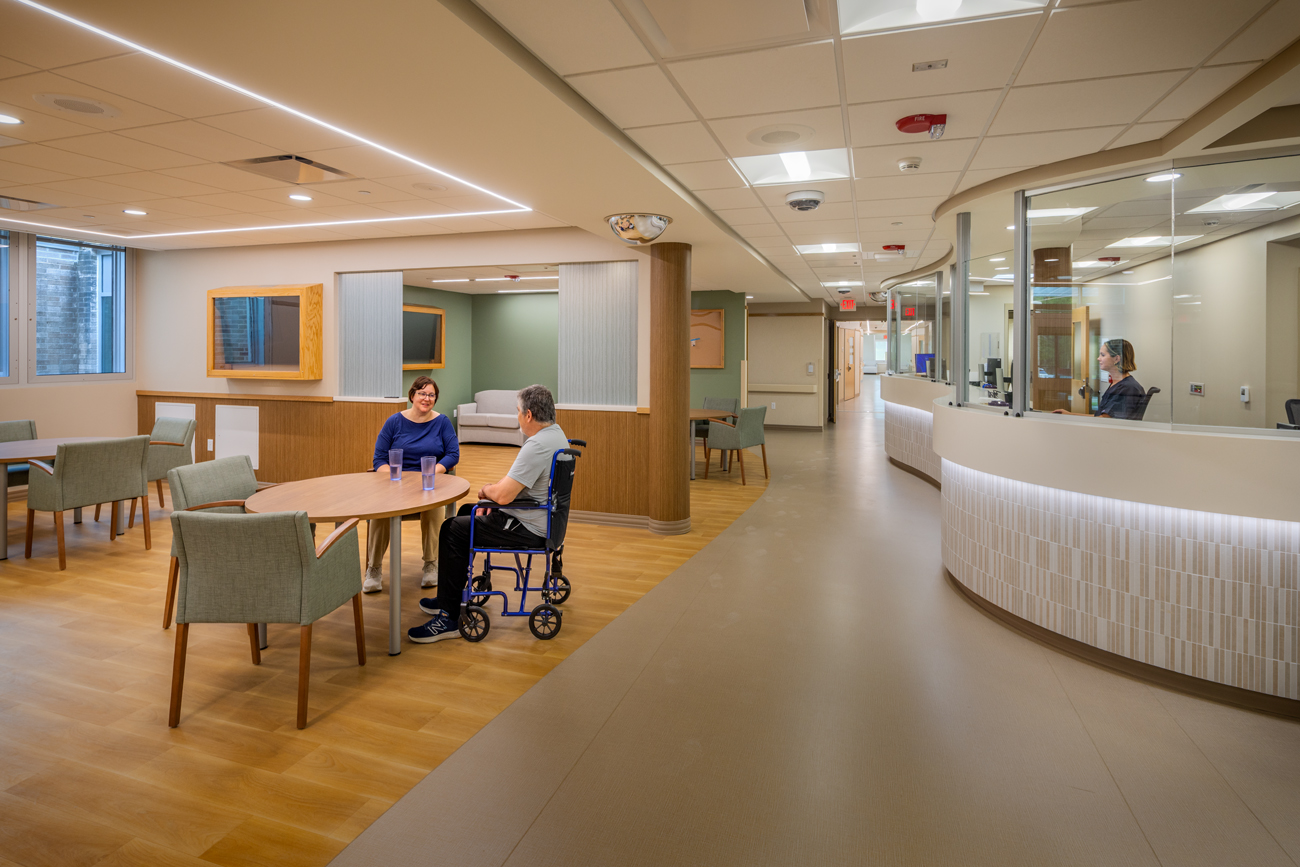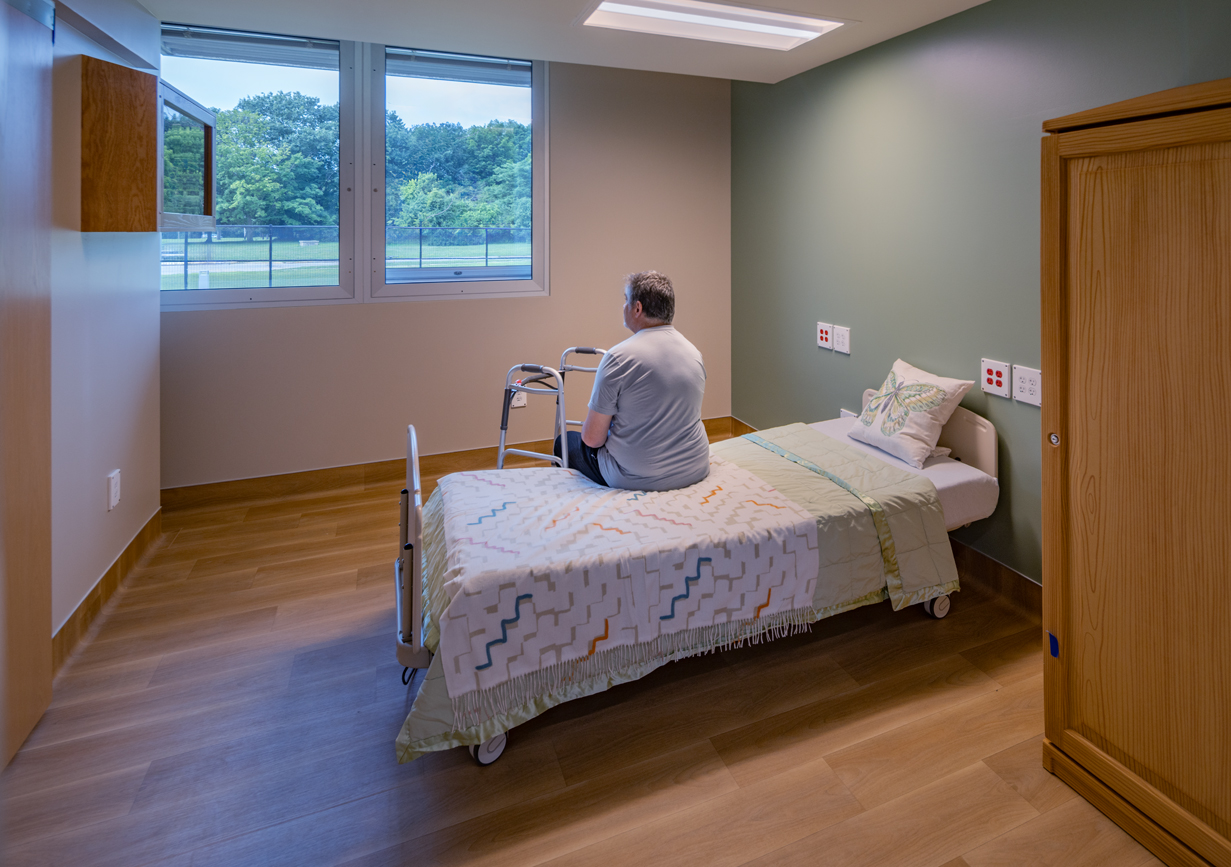

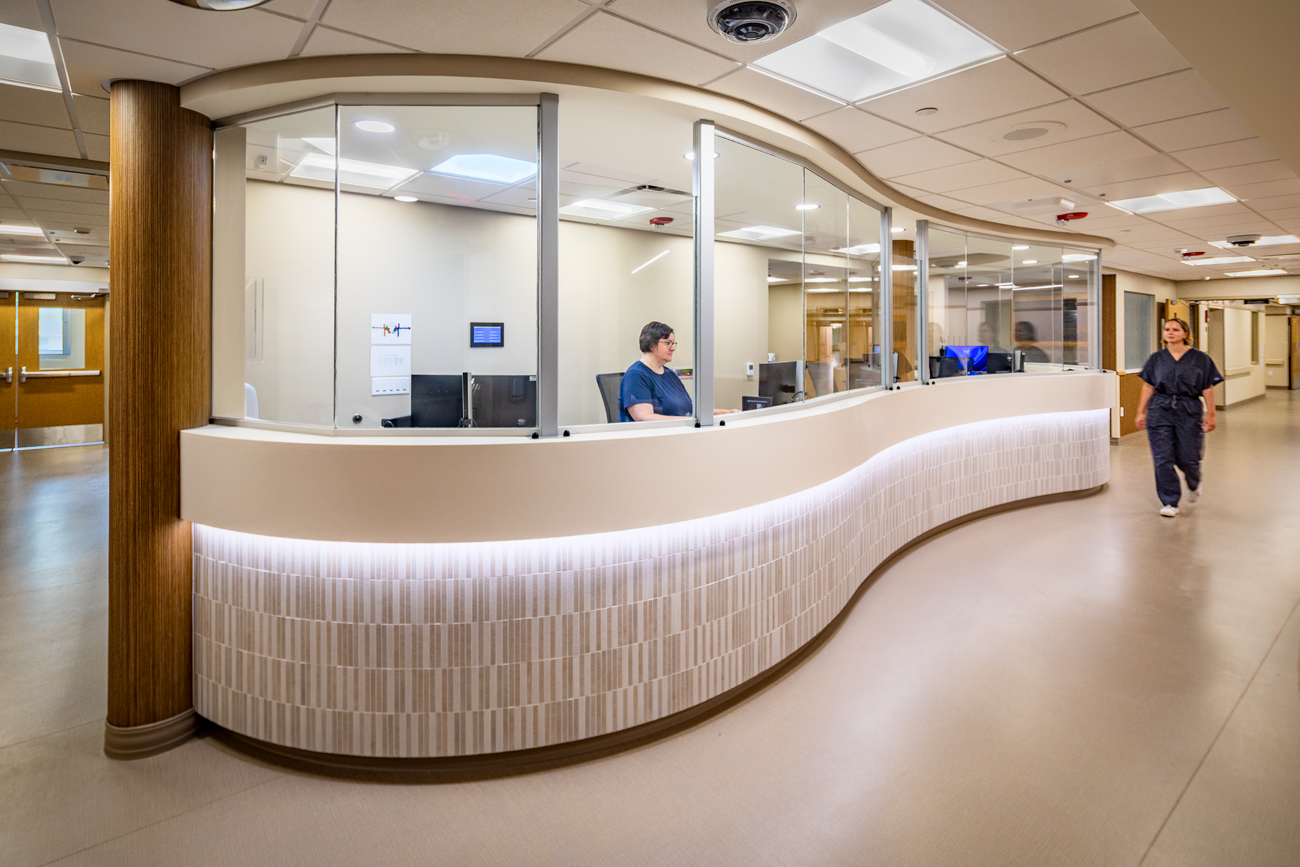
This project renovated the 46,000-square-foot Building 6 on the Central Wisconsin Center (CWC) campus. The facility now provides long and short-term geriatric psychiatric patient care. It serves CWC residents and civil patients previously housed at the Mendota Mental Health Institute (MMHI). This flexible design allows administration to adapt to changing patient volumes. The inpatient behavioral health hospital features two 15-bed patient units. Each unit includes a dedicated nurse station, activity areas, a dining room, and essential support spaces.
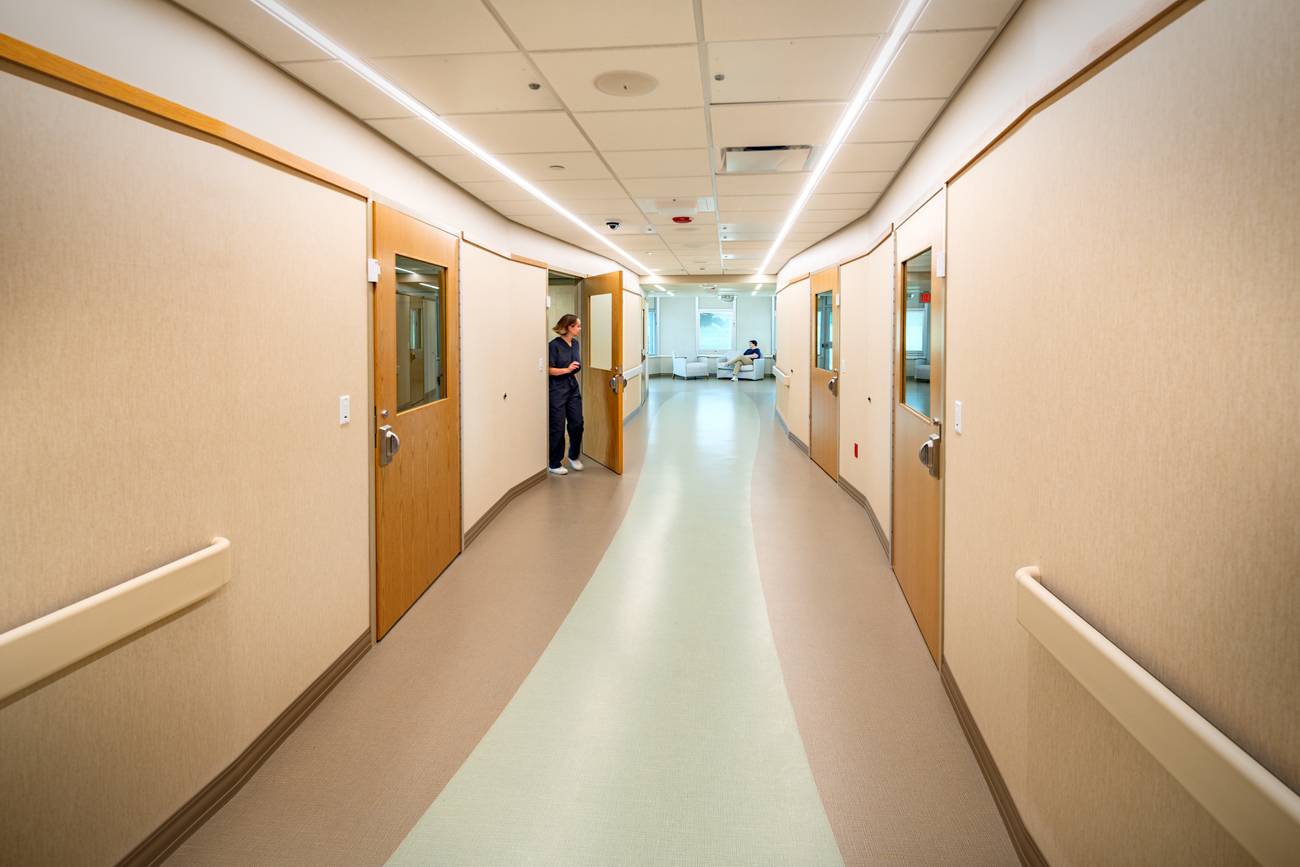
Creating a supportive and safe work environment for staff was a primary project goal. The design features distinct on-stage and off-stage spaces. Curved corridor walls offer practical benefits for staff and a calming experience for patients. The layout positions staff centrally, improving patient visibility and eliminating dangerous blind corners. These thoughtful design elements specifically support patients living with dementia. The continuous loop of the corridor creates a softer, therapeutic atmosphere. It offers a flowing daily walking path that feels open and unconfined.
Safety and dignity guided the design of all patient restrooms. These highly private spaces require special attention in healthcare facilities. The design successfully addresses the unique risk factors associated with behavioral and physical health challenges. All restroom accessories, including grab bars, feature ligature-resistant designs. We also utilized sliding doors that prevent at-risk patients from locking themselves inside the rooms.
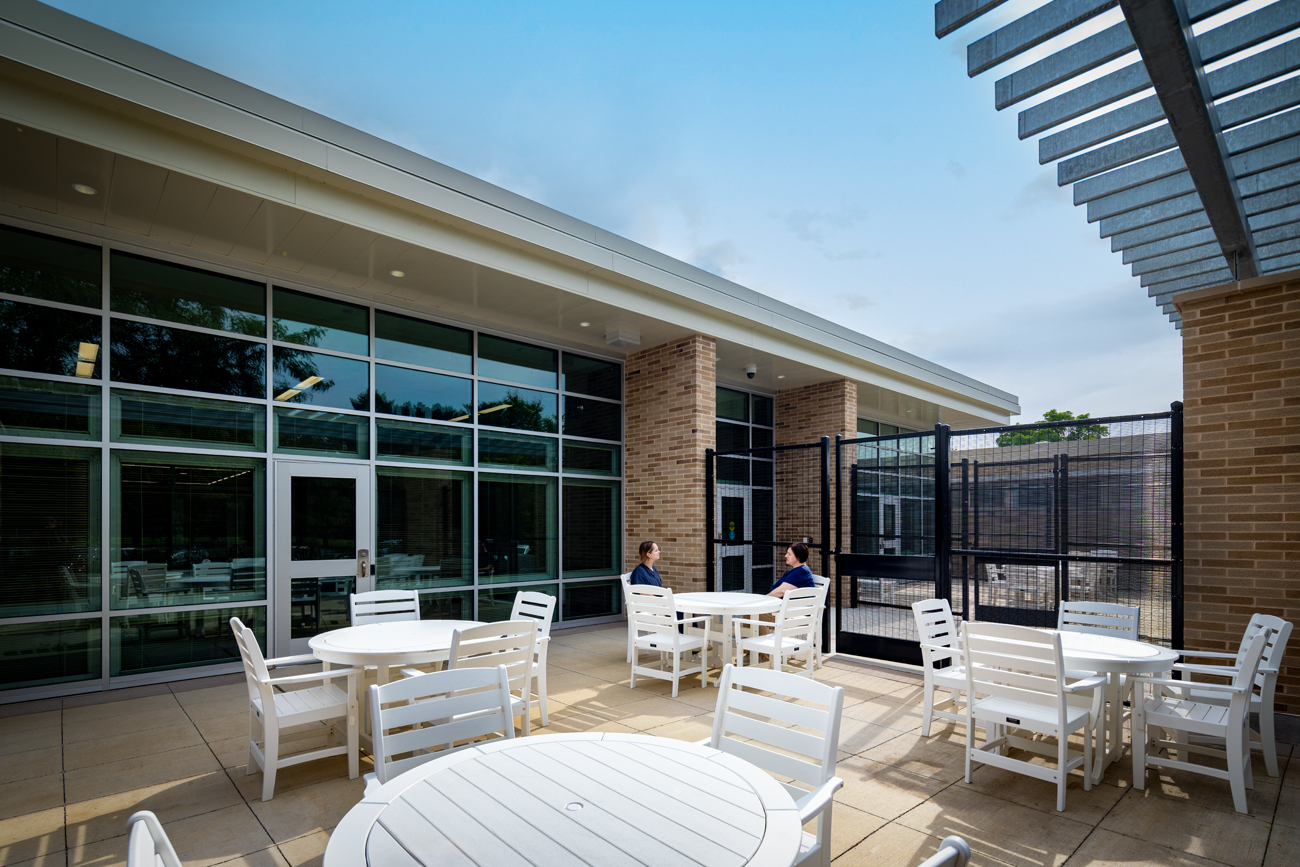
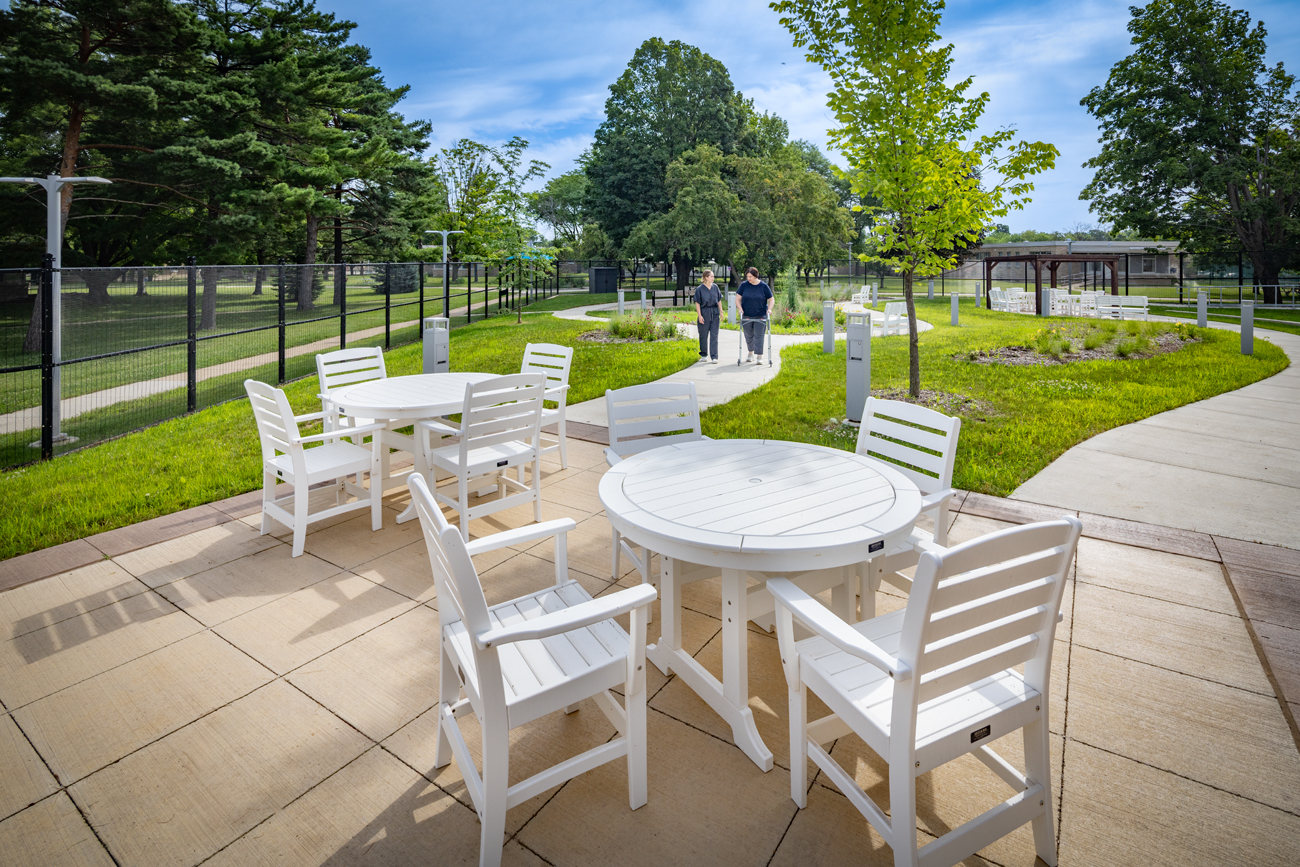
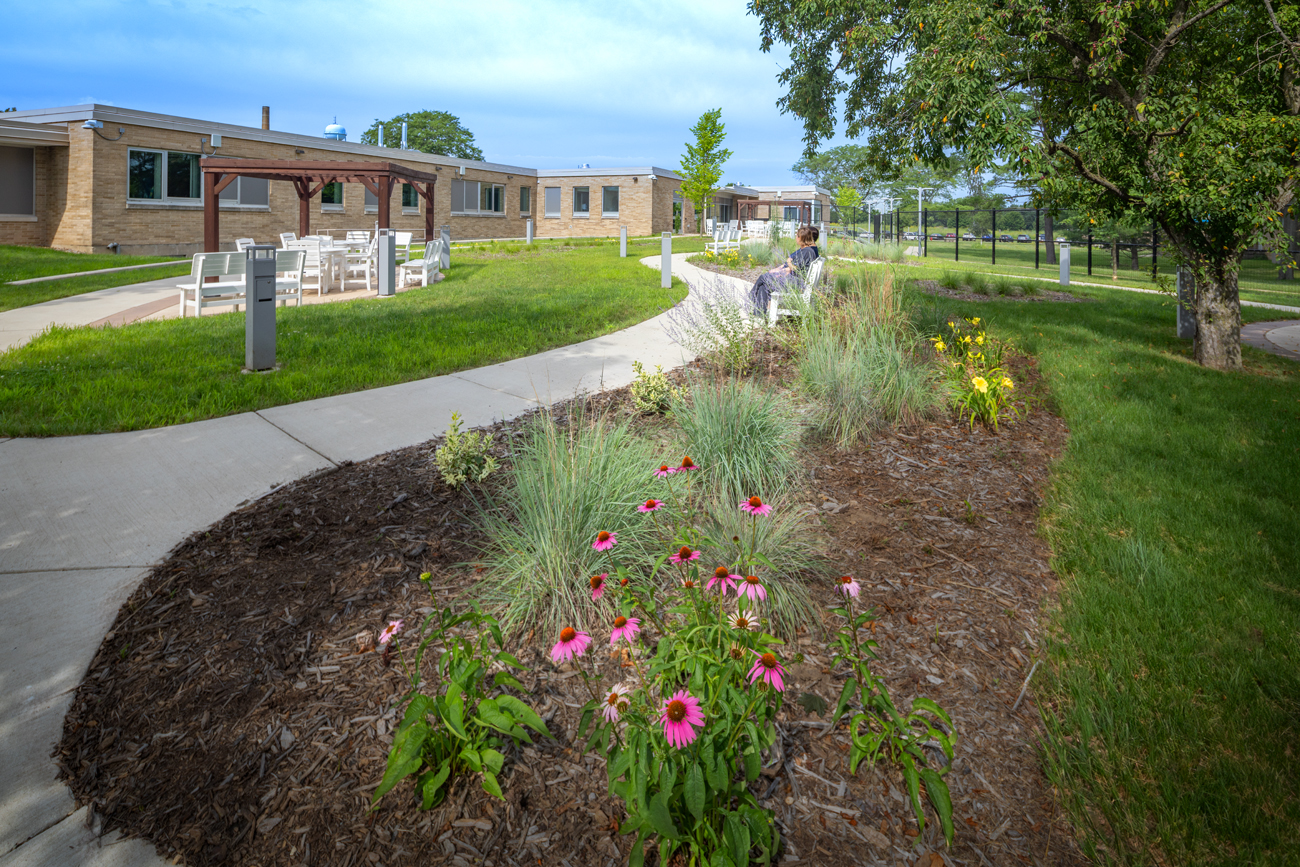
MMHI encourages visits from family and friends. A new addition to the south side of the building supports this vital connection. It provides comfortable indoor visiting spaces with direct outdoor access. The design features a secure outdoor courtyard with a therapeutic healing garden. Similar to the interior, the garden includes a curved, continuous looping path for patient walks. Wheelchair-accessible raised planter beds allow patients to experience gardening as active therapy.